

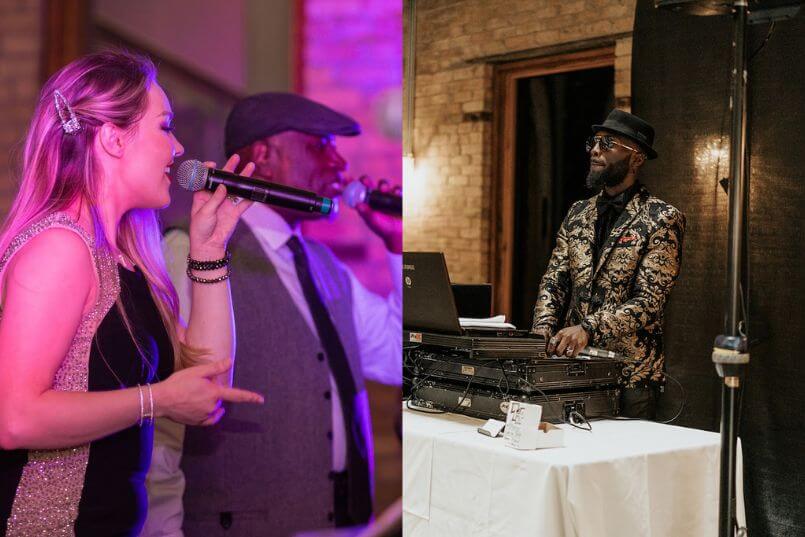
Understanding the wedding band vs DJ decision early can save you from costly changes to your floor plan, timeline, and budget. Your choice of wedding entertainment will dictate the vibe in the room, the songs guests hear all night long, your reception timeline, your floor plan, your guests’ overall experience, and a sizable chunk of your entertainment budget. This kind of wedding music planning early on makes the whole band vs DJ for wedding decision much easier down the line.
Here’s a quick comparison of how a wedding DJ vs live band differs:
- Music selection: DJs have access to a wider catalog of original songs. Bands play live within their set repertoire.
- Performance: Bands provide an on-stage, visible performance. DJs mix and match recorded tracks.
- Space needed: Bands require stage space and room to load in. DJs only need space for their booth.
- Setup: Bands need time for setup and sound check. DJs set up quickly.
- MC services: DJs often fulfill MC responsibilities. Band leaders may make announcements.
- Schedule: DJs play music continuously. Bands take breaks.
- Best for: Bands are well-suited for concert-style, high-energy receptions. DJs are flexible for varied-genre, non-stop dancing receptions.

Pros and Cons of Live Wedding Bands Compared to DJs
What Does a Live Wedding Band Bring?
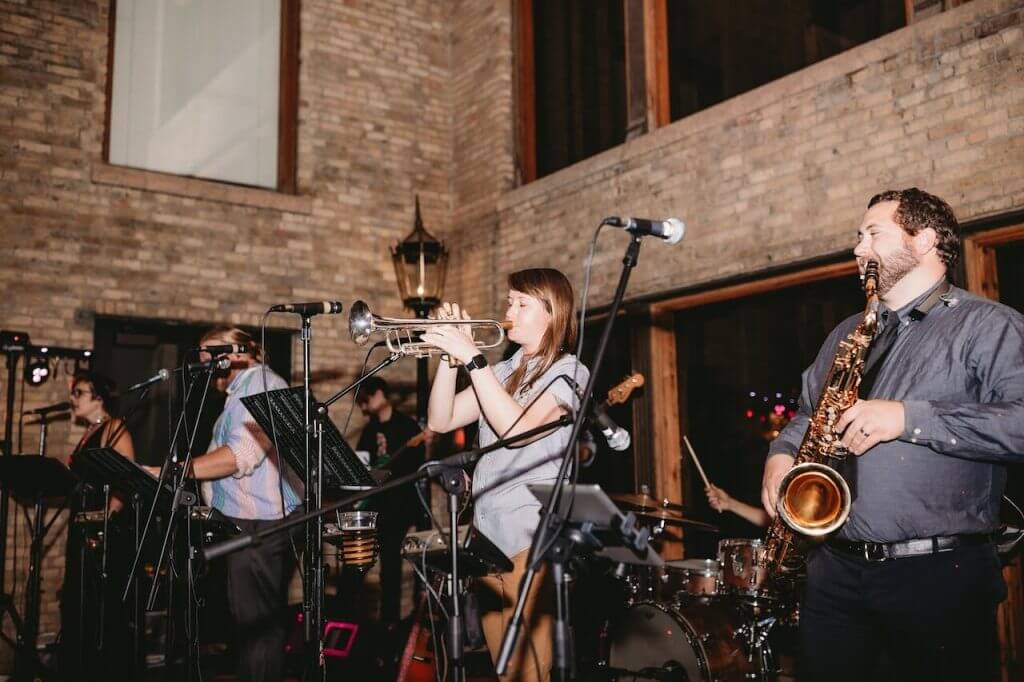
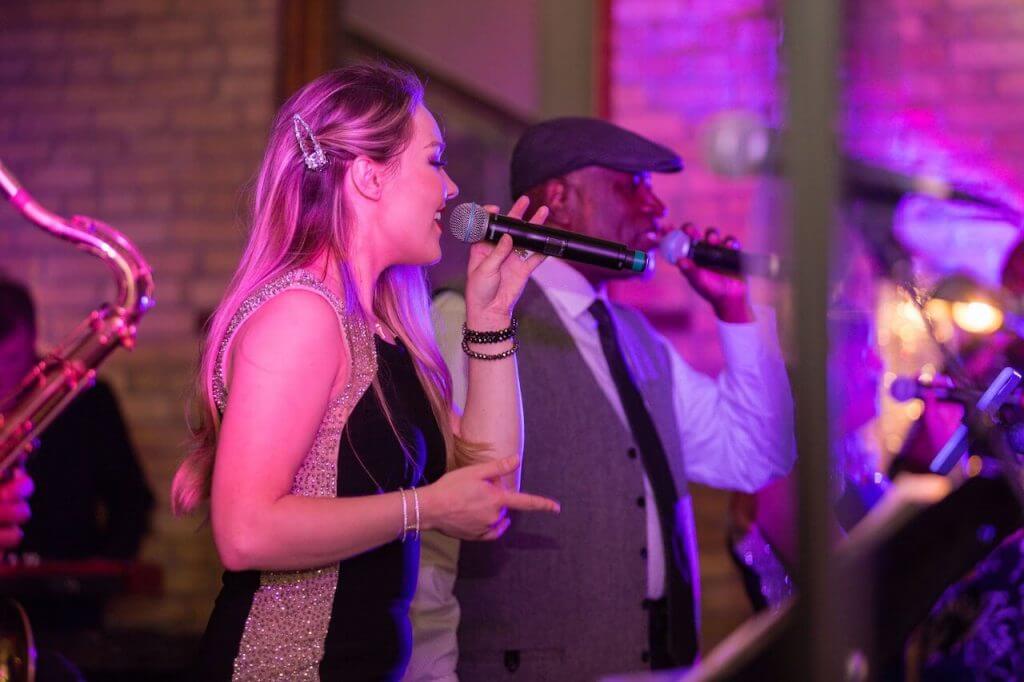
The biggest difference is tangible: a wedding band brings people into the room. For many couples who want a true live music wedding experience, there’s nothing quite like a band, and it’s a big part of what makes live wedding music so appealing. A live music wedding reception has a different kind of energy than a playlist ever could as guests aren’t just hearing the music, but they’re watching it happen.
Things to Consider with Live Wedding Bands
In addition to musicians and all their equipment, bands require staging or performance space, room to load in equipment, a block of time for sound check, power for amplifiers (and sometimes lighting), breaks, and more. Wedding band space requirements are one of the most important wedding band pros and cons to weigh before booking.
Dance Floor Music Choices: Live Bands vs. DJs
There are certain songs you or your guests expect to hear, so make sure they’re covered by the band’s repertoire. If exact copies of the original recordings are critical, a live band may not be your best bet for your wedding dance floor music.
What Does a Wedding DJ Bring?
Pros of Hiring a Wedding DJ
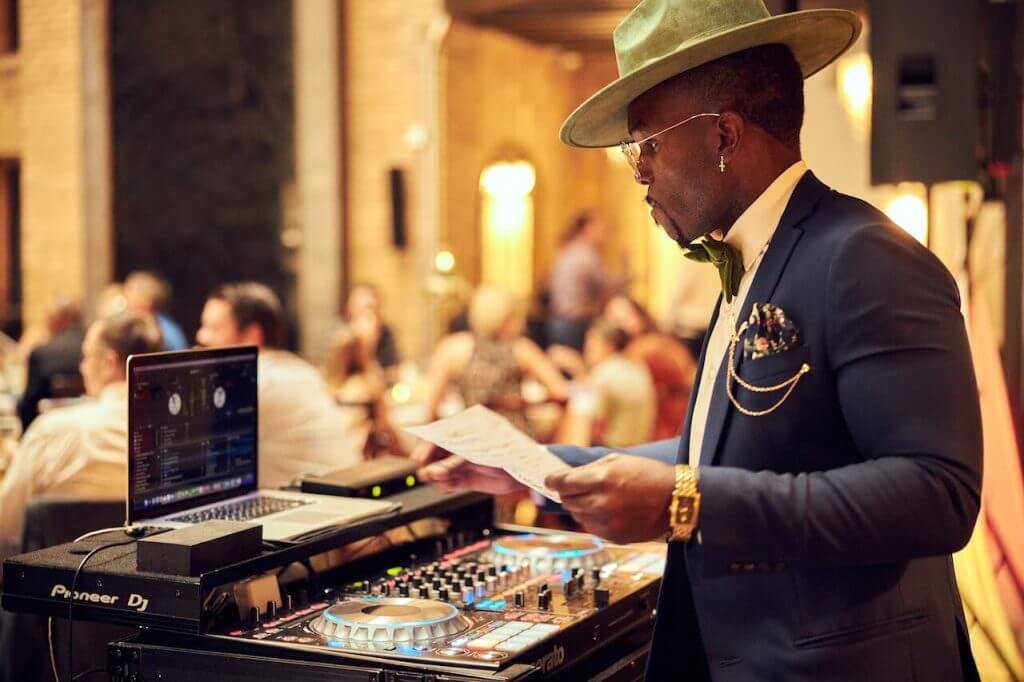
Booking a wedding DJ vs live band leads to a completely different entertainment experience. DJs manage recorded music, mix live, take requests, run mics and speakers, and often coordinate your timeline with the venue. Whether you’re trying to decide between a DJ or band for wedding dancing or filling other portions of your reception timeline, DJs have several advantages.
DJs can instantly shift the mood by changing music genres on the fly, and they can keep music playing non-stop without scheduled breaks. Plus, their space requirements are smaller than a band, which can help venues with strict dimensions or smaller floors give guests different wedding reception playlist options.
What to Think About When Hiring a Wedding DJ
Make sure they have experience mixing music live and can discuss their approach to MCing announcements and working with crowds. Double check their equipment list and make sure it includes speakers, lighting and wireless microphones. Learn their policy on taking requests from guests and if they have backup equipment in case of malfunction. Weighing these wedding DJ pros and cons upfront helps you avoid surprises later.
Compare Wedding Bands vs DJs in Your Reception
Consider the Experience You Want First
Without diving too deep into wedding band space requirements versus DJs logistics just yet, think about what kind of reception feels right for you. Do you want wedding reception music to be subtle background during a formal dinner? Is there a specific theme or music vibe you want to lean into? Ultimately, deciding on a live band or DJ for wedding entertainment comes down to the kind of atmosphere you want your guests to feel the moment they walk into the reception.
Wedding Entertainment Isn’t Just For Dancing
Who (and what) plays when is something you should decide as part of your wedding reception entertainment planning. Dinner music, cocktail hour tunes, formal dances, and opening songs all set the mood for different parts of the night. Many DJs can carry your entire timeline by themselves, while a band will likely need DJ-made dance playlists to play between sets.
Music Variety & Specific Songs
Bands are limited to the songs they know and perform live, while DJs will work with you to build a custom playlist of original recordings.
Make three lists: wedding songs you must have played, wedding songs you’d like to
have played if possible, and wedding songs you don’t want at your reception. Once you know your must play songs, you can decide if you care about hearing the original recordings or if live versions will suffice.
Think About Your Wedding Guests
Consider guest count, age ranges, music preferences, and sensory considerations when planning any wedding entertainment. Keep in mind not every single one of your guests will want to dance (or stay awake) all night, so try to balance options instead of stereotyping the needs of your wedding guest list.
Plan for a Multigenerational Dance Floor
A guest list that spans grandparents to college roommates doesn’t have to mean a compromised playlist. Both bands and DJs can serve a mixed-age crowd well. A good vendor will manage requests and transitions so every generation gets a moment on the dance floor, not just the loudest group in the room.

Consider Your Wedding Venue Early
Some venues just aren’t equipped to handle a live band, while others have restricted availability that makes finding the right band difficult. Here are a few venue-specific questions to consider when learning what your Minneapolis wedding venue can support.
- What are the wedding venue insurance requirements?
- Can they provide equipment storage before and after the event?
- What’s their deadline for vendor teardown?
Don’t Forget to Update Your Floor Plan
Whether you’re booking a full band with drum kit and keyboard or a DJ that brings speakers and lighting, account for equipment, cables, performance flooring, and vendor chairs when you map out your wedding seating chart.
Decide Who Will Handle Announcements and Transitions
Someone needs to introduce the wedding party, keep speeches and formal dances moving, and let guests know when it’s time to hit the dance floor or head to dinner. If you’re working with a coordinator, it’s worth reviewing what a wedding planner does so you know how much of this timeline and announcement coordination they’ll handle versus what falls to your band or DJ.
Many DJs handle this as part of their MC services, and bands typically rely on a bandleader to cover these duties.
Plan for Breaks, Backups, and Timeline Changes
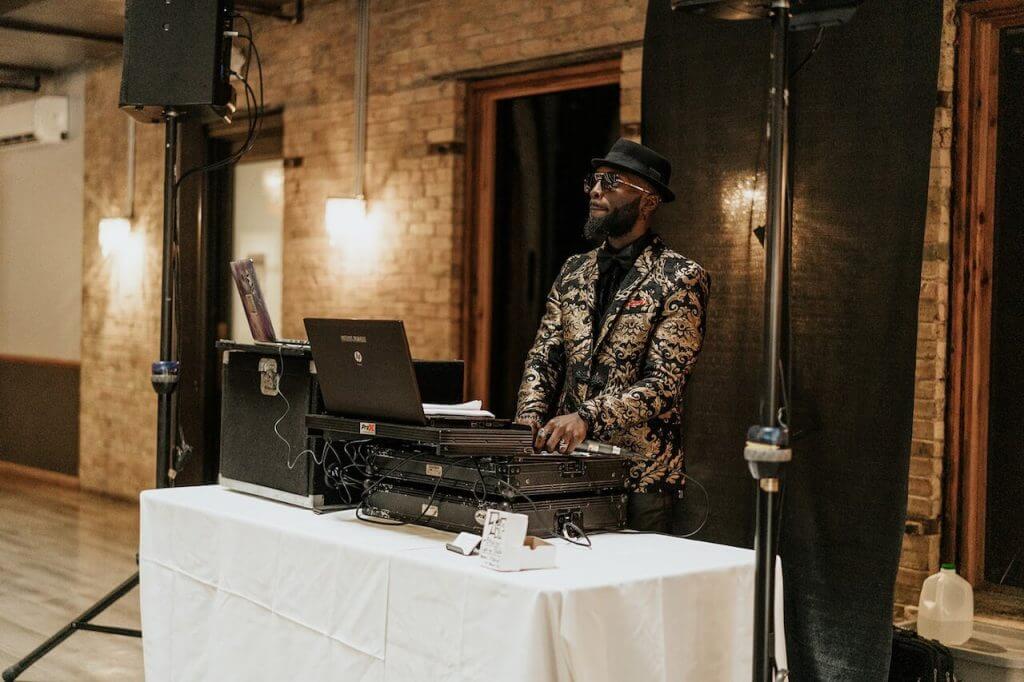
Bands need scheduled breaks, so make sure recorded music is queued up to keep the dance floor going while musicians step away. DJs, on the other hand, should have backup equipment on hand in case something malfunctions mid-reception. Ask both vendors how they handle performer availability, last-minute delays, and overtime if your reception runs long.
Compare Prices Appropriately
Many DJs offer microphones, lighting, MC services, and coordination as part of their standard package. Bands often provide MC services via their bandleader, but may charge extra for equipment, seating chart space, and setup.
Your wedding entertainment budget should include vendor travel fees, setup time, lighting, decibel controlled sound equipment, MC services, overtime charges, ceremony audio setup, vendor meals and parking, and vendor insurance.
Interview the Band & DJ
Below are some questions to ask a wedding band or questions to ask a wedding DJ that come up again and again. Whether you’re leaning toward a wedding band and DJ combo or still deciding between the two, run through this checklist with them:
- Who’s performing, and can you meet or hear them beforehand?
- What’s their repertoire or music library, and how do they handle song requests?
- What equipment do they provide (speakers, mics, lighting)?
- Will they handle MC duties, and what’s their style?
- How much setup and sound check time do they need?
- How much physical space do they require?
- What’s their break plan (for bands) or backup equipment plan (for DJs)?
- Do they carry insurance?
- What are their overtime rates?
- How do they coordinate with the venue on load-in, power, and teardown?
Can You Hire Both a Band and DJ?
If you’re leaning toward live music for the ceremony or dinner hour, browse a list of acoustic wedding songs to get a feel for what a smaller, stripped-down setup can sound like before your DJ takes over for dancing. Hybrid wedding entertainment is increasingly popular, and couples often book a live band for the ceremony or dinner hour, then bring in a DJ to keep the dance floor moving all night.
Avoid Duplicated Services and Costs
The one catch with hybrid entertainment is overlap. Before booking both, clarify who’s providing the speakers, who’s bringing the microphones, and who’s handling MC duties and transitions between sets. Sort out power needs and setup space for both vendors ahead of time, and make sure they’re communicating with each other (and your venue) so you’re not paying twice for the same equipment or stepping on each other’s timeline.
Band vs. DJ Decision Breakdown
Want live performance energy? Hire a band.
Need exact original recordings and maximum variety? Hire a DJ. If uninterrupted dancing is your top priority, having a DJ manage your entire timeline is one less thing to worry about.
If you have limited venue space and setup restrictions? DJs require less room.
Want a little bit of both? Mix and match live music with a DJ as your form of hybrid wedding entertainment.
Contact The Lumber Exchange
However you land, the right choice comes down to your venue, your guests, and the atmosphere you want for your reception.
We work with great bands and DJs year-round. With two spacious wedding venues, indoor dance floor areas, and outdoor venues for rent, we welcome you to explore our spaces before you decide – whether you’re planning a big celebration or an intimate wedding reception.
As you weigh Minneapolis wedding entertainment options for your downtown Minneapolis wedding venue, don’t forget to consider sensory-inclusive wedding reception practices if that matters for your guest list, and check out our guide on how to pick a wedding date if you’re still finalizing your timeline.
Got questions about booking live entertainment for your Minneapolis wedding reception at The Lumber Exchange? Send us a message and we’ll get back to you.
FAQ
For wedding dance floor entertainment, is a band better than a DJ?
This depends on your music selection, venue, guest preferences, and more.
Is a band more expensive than a DJ for weddings?
Typically, yes.
Can a wedding band play with a DJ?
Yes! Bands and DJs perform together for weddings all the time.
What questions should you ask a wedding band?
We recommend asking about their break plans, required space/power, and setup/soundcheck timelines.
What questions should you ask a wedding DJ?
We recommend asking about their music library, mixing style, and back-up equipment plan.
Does a wedding band need more space than a DJ?
Generally, yes. Bands need room for staging, instruments, and load-in access, while DJs typically only need space for a booth.
When should you book wedding entertainment?
As early as possible. The best bands and DJs get booked up to a year in advance, especially for peak wedding season dates.
Sorry, the comment form is closed at this time.