

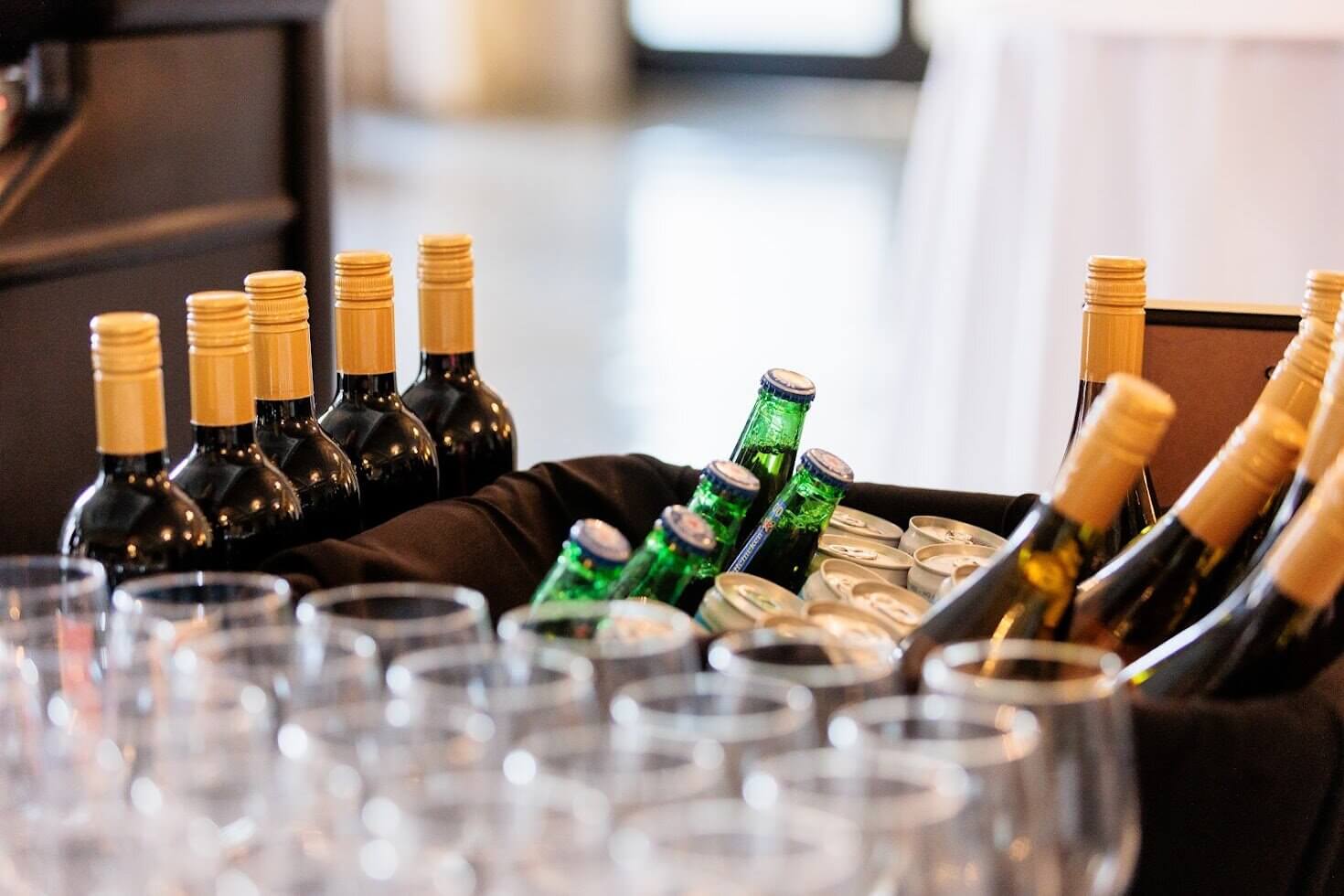
Figuring out the details of your reception is a big part of your wedding planning, and a big part of your reception is your bar package. This expense line in your budget is not a small one and your choice of a bar package can swing your total wedding cost by a lot. The good news is that you do have options. So, let’s dig into wedding bar packages so you can pick a format that works for you and communicate it clearly to your guests.
Let’s look at:
- Common bar package formats
- What changes the price of each package
- How to keep bar service running smoothly
- Venue policies and responsible bar service
- The etiquette of communicating your bar package to your guests
The 5 Most Common Bar Formats
It is often thought that choosing a bar format means looking at a hosted bar vs cash bar, but there are other formats besides these two options that can provide you with some budget flexibility. Let’s lay out the five most common.
Full Hosted Bar Wedding
A full hosted bar is what is commonly referred to as an “open” bar and basically means that the bar is open for your guests to order drinks and beverages from the bar throughout the reception and the host picks up the tab. There is no out of pocket expense for your guests and is considered a gesture of high hospitality.
The open bar wedding cost is also usually the highest of wedding bar packages, but easily creates a celebratory and social atmosphere. The cost is usually calculated as a flat fee per person and if you expect a crowd that will drink a lot, this calculation can be less expensive than paying per drink consumed. You can limit the sticker shock of a full hosted bar by working with your venue to add a per person cap or a spending ceiling to your package.
Beer and Wine Hosted Bar
A beer and wine bar wedding simply means that the host covers beer and wine consumption for guests, but any spirits or mixed drinks, which usually have a higher cost, are paid by the guests. This type of wedding bar package is usually less expensive than an open bar but still provides a gesture towards hospitality. It is a compromise between festive hospitality and budget consciousness. This option is usually a good value trade-off when compared to other options.
Limited Open Bar Wedding
This option is another way to control the cost of your bar package but still provide your guests hospitality that can set a festive and social atmosphere. It usually includes a set list of wine, beer, and spirits that are available without cost to your guests, but if they want to order something more expensive than what is available on the list, they are free to pay for it out of pocket. This package can, however, be confusing for your guests and clear signage and communication is required to avoid a frustrating experience.
Consumption Bar Wedding
This type of bar package is set up for the host to pay per drink consumed by the wedding guests. A consumption bar can get expensive fast, but can be a viable option for smaller weddings where you anticipate light drinking. You can also add a spending cap to your package to avoid end-of-the-night surprises.
You can also add a signature cocktail wedding bar to a consumption bar that will steer your guests to consume a celebration cocktail where you can control the ingredients and therefore the cost. This can be a way to control costs in a subtler, yet celebratory way. You can work with your venue to provide a cocktail to your guests that can express the celebratory nature of your reception and reflect something special about your relationship or who you are as a couple. It is a way to balance fun with controlling your budget. This option can be added to other wedding bar packages as well.
Cash Bar Wedding
This wedding bar package is set up for your guests to pay for their drinks and beverages out of pocket. This option is used most often for weddings where budget constraints limit the ability to pay for this expense. It is often also used for smaller, more casual or afternoon weddings, and where heavy drinking is not expected. Be aware, however, that there can be a fee charged for bar set up costs that the host is expected to pay.
Since each guest will be expected to pay for each drink, this option is best if your venue is set up for transactions. Your guests also need to be notified prior to the wedding that you are having a cash bar, so they are also equipped for transactions.
This option can be sensitive for guests and wedding etiquette frowns upon its use as it can imply a lack of hospitality. Many guests often feel that being invited to celebrate your day with you should not include paying for their own drinks. You can modify this option to alleviate this sensitivity by providing guests a signature cocktail, or pay for non-alcoholic beverages like soft drinks, juices, or a signature mocktail. You can even consider a drink ticket format where you pay for the first drink or two and your guests pay thereafter.
Real Cost Drivers for your Wedding Budget
When choosing your wedding bar package, it is important to know what real cost drivers are tied to your options. These are the variables that move the numbers in your budget. Your guest count will, of course, drive costs. It is much less expensive to serve alcoholic beverages to 50 people than to 150 or more. Your wedding reception timeline and the length of your event is also a cost driver, as is the day of the week and the season, which can create either a higher energy crowd or a calmer one. Another cost driver is the drink preference of your guests. Beer and wine drinkers are going to be less expensive than those who prefer spirits and cocktails. The style and pace of your cocktail hour can also affect cost. A longer time spent on your “cocktail hour” prior to your meal will translate to more drinks being consumed. This can be limited by limiting the amount of time you allow for mingling and drinking before your wedding meal is served.
The package dependent benchmark cost for alcohol and bar service for a wedding can range between $15 to $60+ per person.
Read more: How to Create a Wedding Budget: Tips and Breakdowns
Common Wedding Bar Packages: A Comparison
| Bar Format | Guest Experience | Cost Control | Service Speed | Perceived Hospitality | Risk Factors |
| Full hosted bar | High, maximum freedom, guests order anything with no hesitation | Open-ended spend, final bill can be unpredictable | Service is made easier by pre-stocked inventory and no delays from payment processing | Exceptional | Overconsumption liability, bill shock, long lines during cocktail hour |
| Beer and wine hosted bar | Fairly high, comfortable for most guests, spirit drinkers may feel limited | Solid predictability with per bottle pricing and an overall moderate spend | Simple menu options equals faster service and easier flow for guests | Very good | Spirits drinkers can feel underserved, low overconsumption risk, minimal confusion at the bar |
| Limited open bar | Medium, enjoyable while it lasts, cutoff can feel abrupt | Predictable, Hard cap via hours or tickets helps keep the budget firm | Ticket redemption or service restrictions can slow service and cause lines, especially during heavy cocktail hour timing | Good | Rush to drink before cutoff, confusion about rules or ticket counting, perception of being “cheap” if cutoff occurs too early |
| Consumption bar | Fairly high, guests enjoy full selection with no friction with bar service | Moderate control, you only pay for what is consumed, but high-consumption guests can spike the tab | No point of service payment makes for a smooth flow for guests | Very Good | End-of-night bill shock with no cap, heavy drinkers disproportionately raise cost, minimal confusion for guests, smooth experience |
| Cash bar | Rate low, many guests find it unexpected, some may drink less or skip it | Zero to low cost for host, venue handles all liability | Payment processing, card readers, and change create significant service delays and cause long lines | Poor | Sticker shock for guests, slow lines with payment transactions, widely seen as a etiquette faux pas, guests may leave early |
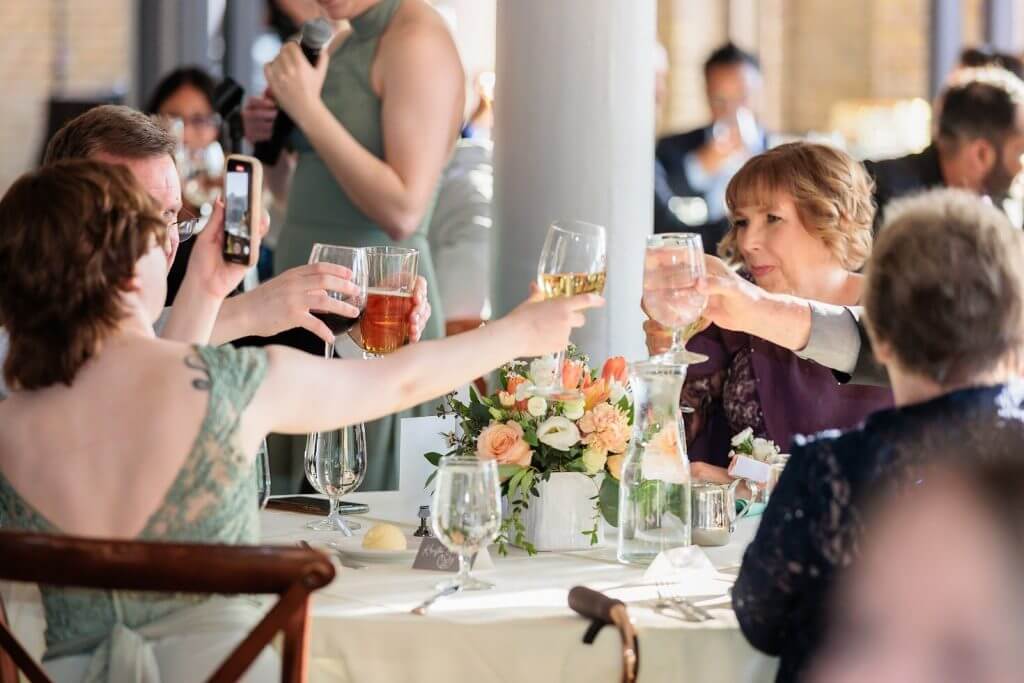
If Considering a Cash Bar: Read This First
Cash bar etiquette for a wedding can be tricky as some guests tend to react strongly that drinks at no cost are a part of wedding hospitality. It is often an expectation that the celebration you are hosting will include alcoholic beverages.
If this is the option you choose, clear communication that sets the expectation for out of pocket costs for your guests is necessary. This communication needs to happen prior to the wedding and is usually best to be included with the information about your reception on your invitation and on your wedding website. It is much easier to set expectations prior to your wedding than have your guests be caught unaware at your reception party.
There are also alternatives, discussed in detail earlier, that can protect your hospitality, including:
- Hosted beer and wine only
- Hosted cocktail hour and then cash
- One or two hosted signature drinks or a champagne toast then cash
How to Estimate Quantities without Guessing
There are ways of figuring out how much alcohol for a wedding to plan for without it being a guessing game. Wedding bar pricing per person can vary depending on your wedding bar format. Use a wedding alcohol calculator as a baseline, then adjust to your crowd. The calculator will adjust for your planning ratios that include the length of your reception (in hours), the number of guests you plan to have, and the pace of drinking you anticipate.
Wedding Bar Menu Ideas
If you are looking to choose bar options that are thoughtful yet not complicated, think of keeping it to a tight, crowd-pleasing list.
For beer drinkers, offer one light beer and one darker beer option or a craft option if your list includes beer lovers.
For those who prefer wine, offer both a white and red option and try to be middle of the road on cost versus taste. Try for a dry yet fruity and light white wine and then a red that is richer with more depth.
As for a signature cocktail drink, something that is not too complicated but with balanced flavors is usually the way to go. Something too sweet or two alcohol forward can leave your guests underwhelmed or overwhelmed for all the wrong reasons. Think light and refreshing with a little twist of unexpected to be festive yet drinkable.
Mocktail Bar Wedding Considerations
Non-alcoholic wedding drinks have become more popular over the last few years as mocktails have become more sophisticated and prevalent on restaurant menus. Non-alcoholic drinks have gone beyond the Shirley Temple with grenadine and a splash of cherry juice. And although non-alcoholic drinks do consider children, mocktails that have a more complicated flavor profile appeal to a broader adult palette as well. If you are offering a mocktail, make it purposeful and not an afterthought.
On the non-alcoholic side of things, also remember to offer your guests plenty of water and also coffee or tea, which if you are having a late reception can be a lifesaver.
Wedding Reception Bar Planning
The flow of your wedding reception bar service matters as much as the drinks. No one wants their guests standing in a long line to be served or to have that line interrupt the flow of your guests through the space. Thoughtful bar placement and having enough service points to accommodate your number of guests can alleviate these issues.
Cocktail Hour Pacing
There are several things to consider for your wedding bar timeline, and cocktail hour is one of them. This time usually fits between the end of the ceremony and before food is served. It is a transition time, but also when the party portion of your wedding day commences.
To avoid a line problem during this time, keep the menu simple, have well-made and visible signage, and consider batching your cocktails so they can be served quickly.
Venue Rules and Responsible Service
Wedding bar service rules follow the regulations and laws for serving of alcohol in each state and some venues, to limit their liability, will also have their own rules about serving alcohol. The serving of alcohol will include ID checks and other reasons for refusing service. These rules are there to protect the venue, you, and your guests.
Venues can refuse service to intoxicated guests and will follow applicable beverage laws.
A Few Final Words on Wedding Bar Packages
The bar package for your wedding reception can help set the tone for your wedding celebration. It is not only about the consumption of alcohol, but how the drink service makes your guests feel about how they are experiencing the festivities. Your choice of bar package can make them feel like welcome guests, but it is also a significant budget line. Your choice needs to balance guest experience with cost expectations. Your wedding venue, such as the Lumber Exchange, can help you weigh your bar package options and pick the one that is best for you.

Your Wedding Bar Packages FAQ
1. What are the most common wedding bar packages?
A full hosted wedding bar, beer and wine hosted bar, limited bar, consumption bar, and cash bar are some of the most common wedding bar packages.
2. What is the cheapest bar option that still feels generous?
A beer and wine hosted bar rates high on experience and hospitality for your guests but comes with a lower price tag than most other options besides a cash bar.
3. What is a consumption bar and when does it make sense?
With a consumption bar you pay for what is consumed per drink. This makes the most sense for smaller weddings and where you do not expect heavy consumption from your guests. You can also put a cap on cost so you do not go over what you budget.
4. How do drink tickets work without feeling awkward?
A drink ticket wedding can feel like you are handing a limited prize to your guests instead of hospitality and using them can feel more like a convention than a wedding. However, you can design the tickets in a fun and festive way and set up their usage to be smooth and easy for your guests.
5. How many signature cocktails should we offer?
One or two signature cocktails is recommended. More than that can slow down service and become more complicated than necessary.
6. How do we plan for non-drinkers and kids?
Plan mocktails, kiddy cocktails, juice, and soft drinks to be served as easily and in the same flow as alcoholic drinks. Plan for them as thoughtfully as you do other drinks and not as an afterthought. Not everyone drinks, even if they are of age, and you do not want them to feel like outsiders since they are guests.
7. How do we prevent long bar lines?
Pre-stocking and pre-mixing along with enough service points and limited payment transactions can significantly reduce bar lines. Clear signage and crowd flow also help.
8. What should we ask the venue about bar service?
Wedding bar questions to ask venue include:
- Rules for overconsumption and ID checks
- How many service points do they recommend for how many guests you will have
- Caps for consumption or full hosted bars
- Service and set up fees
- Suggestions on signature cocktail and beer and wine selections
- Costs per person for a full hosted bar
9. Should guests tip at a hosted bar wedding?
Wedding bartender tips are not expected at hosted bar weddings as hosts typically cover the gratuity.
10. How early should we tell guests if the bar is cash?
Wedding bar etiquette suggests that you should let your guests know that it is a cash bar before the wedding so they can plan on having cash or a credit card handy when your reception begins. It also helps set expectations and curb any sensitive feelings about asking your guests to pay for their drinks.
Sorry, the comment form is closed at this time.