

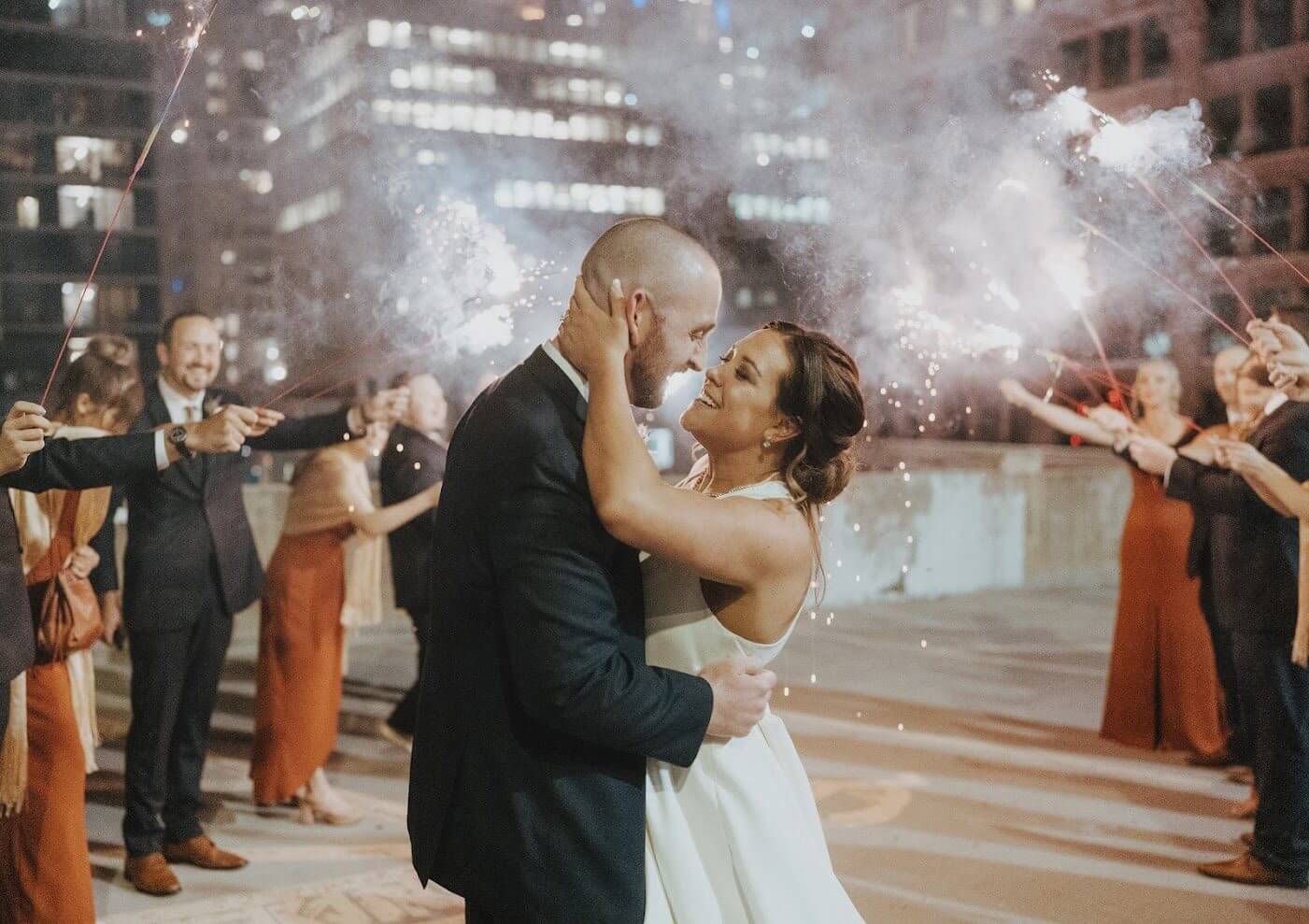
Forget the 15-location scavenger hunt. Great downtown Minneapolis wedding photos come from the right wedding photo spots Minneapolis couples actually use, a wedding photo timeline built around light, and wedding day buffer time for the moments that run long.
In this article, we’ll explain exactly how you can achieve stunning Minneapolis wedding photos without ruining your timeline or missing cocktail hour.
Select your non-negotiable photos first
Detail shots, getting ready, and the first look decision
Detail shots, including the dress, rings, and florals, happen before the ceremony. Block clean, uncluttered space at your venue or hotel suite, and ask your photographer to prioritize these images before anything else.
If your getting ready photos wedding space feels cramped or dim, ask your venue coordinator about a public lounge or sitting area with better light.
First look vs. no first look is the biggest logistical decision you’ll make. A first look (meeting privately before the ceremony) lets you take most couple and wedding party portraits pre-ceremony. The payoff: you walk into cocktail hour instead of missing it. If a first look isn’t right for you, your portrait block shifts to post-ceremony, so build your timeline accordingly.
Family formals and wedding party photos
A tight family formal photos timeline starts with a list including immediate family and parents. Group by size and get the largest groupings done first. Assign a family member to gather people by name. Remember to use a wedding party photo checklist to keep things moving.
Build your timeline around sunset
Sunset time Minneapolis wedding planning should drive every other scheduling decision you make, with everything else building backwards from it.
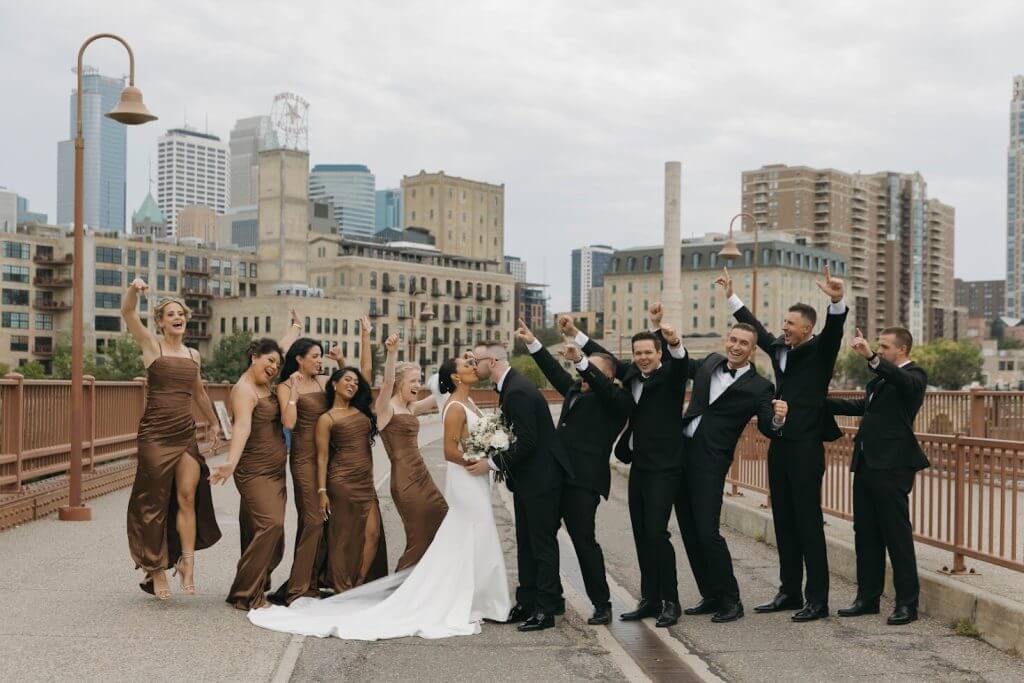
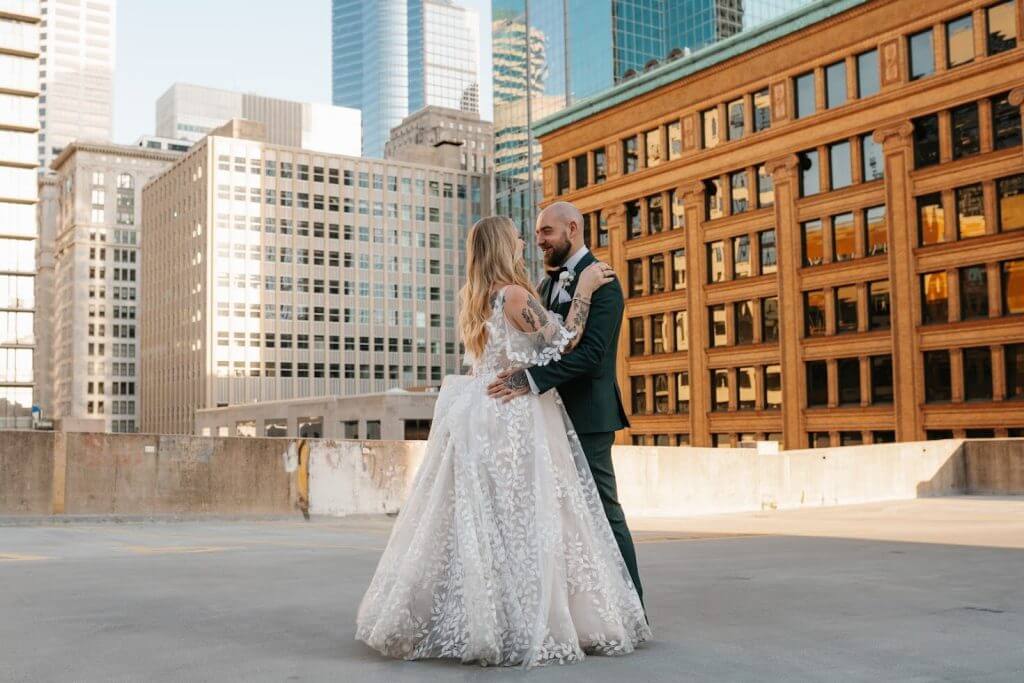
Golden hour wedding photos (taken in the 30 to 60 minutes before sunset) produce warm, soft, flattering light that makes downtown Minneapolis look exceptional. If you miss that Minneapolis skyline wedding photos window, you’re working with flat midday light or flash, and no filter fixes that. Before you finalize anything, look up the exact sunset time your Minneapolis wedding date requires at timeanddate.com. Work backward 60 to 90 minutes and build your ceremony end time around that window.
Here are some sample sunset times in Minneapolis by season:
| Season | Representative Date | Approximate Sunset |
| Winter | January 15 | 4:51 PM |
| Early Spring | March 21 | 7:38 PM |
| Late Spring | May 15 | 8:28 PM |
| Summer | June 21 | 9:03 PM |
| Early Fall | September 15 | 7:31 PM |
| Late Fall | October 31 | 6:05 PM |
| Late Fall/Winter | November 15 | 4:54 PM |
Summer weddings have the most flexibility. Winter and late-fall couples need to treat golden hour as a hard stop and plan outdoor time in short, intentional bursts.
Wedding portrait time: How long should you actually plan?
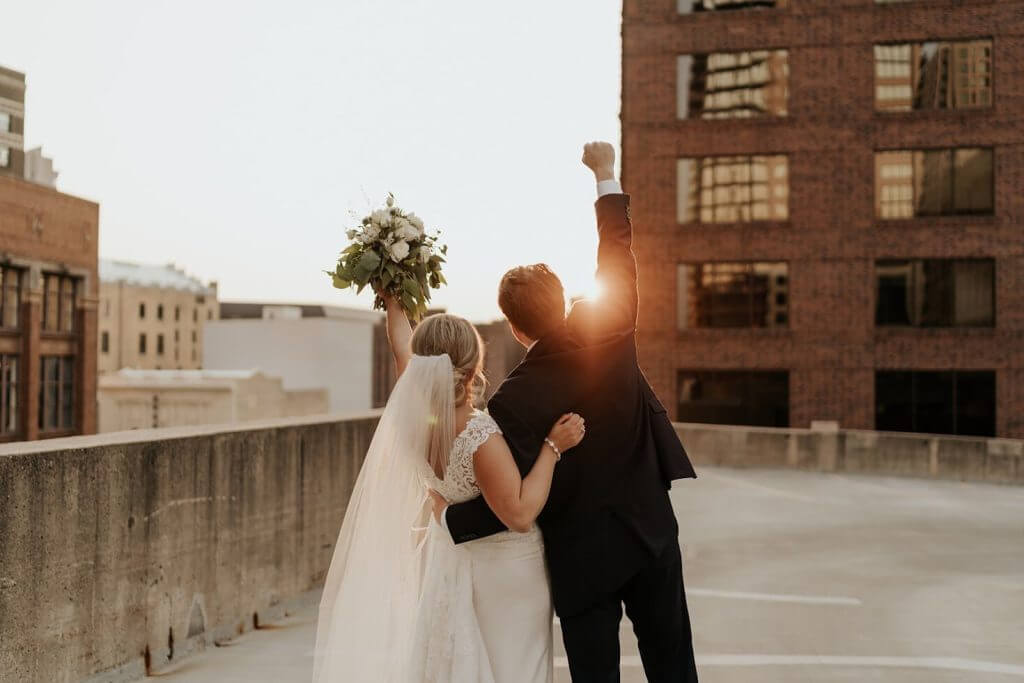
Wedding portrait time and how long you need depends on your location count, list length, and how well your wedding party follows directions. Here’s a realistic baseline:
| Block | Time | Notes |
| Getting ready photos | 30–45 mins | Budget 60-90 mins if you want genuine candid moments |
| First look + couple portraits | 30–45 mins | Pre-ceremony; assumes minimal travel between hotel and venue |
| Family formals | 20–30 mins | Budget 45+ mins if your family is hard to gather |
| Wedding party photos | 20–30 mins | Keep groupings tight |
| Post-ceremony / golden hour | 20–45 mins | Your best light of the day |
Always remember the wedding day buffer time rule: Add 10 to 15 minutes to every block. Transitions always take longer than expected.
Resources like The Knot recommend budgeting 30 minutes for family formals alone, and that’s for a short list. Map these blocks explicitly into your wedding reception timeline before you share it with vendors.
Downtown Minneapolis photo locations couples actually use
These are among the best places for engagement photos Minneapolis couples return to, so if a location feels right during your engagement session, it’ll likely work even better on your wedding day. Keep the final list to three or four spots that serve different visual purposes.
Stone Arch Bridge wedding photos
Stone Arch Bridge wedding photos are among the most requested images in downtown Minneapolis. The 1883 limestone and granite bridge is perfect for Minneapolis skyline wedding photos, the Mississippi River, and St. Anthony Falls in a single shot.
Best for: Minneapolis skyline backdrop, river leading lines, golden hour portraits, classic city look.
Mill City Ruins wedding photos
Mill City Ruins wedding photos deliver a layered, textural backdrop that no studio can replicate: converted warehouse architecture, crumbling stone walls, and the ruins of old flour mills along the Mississippi. This stretch of the Warehouse District, Riverfront, and Mill District gives photographers flexibility when one spot is crowded and creates a visual vocabulary that reads as timeless without being predictable.
Best for: Historic texture, industrial backdrops, moody editorial shots, photographers who need location flexibility.
LXMPLS and the Lumber Exchange Building
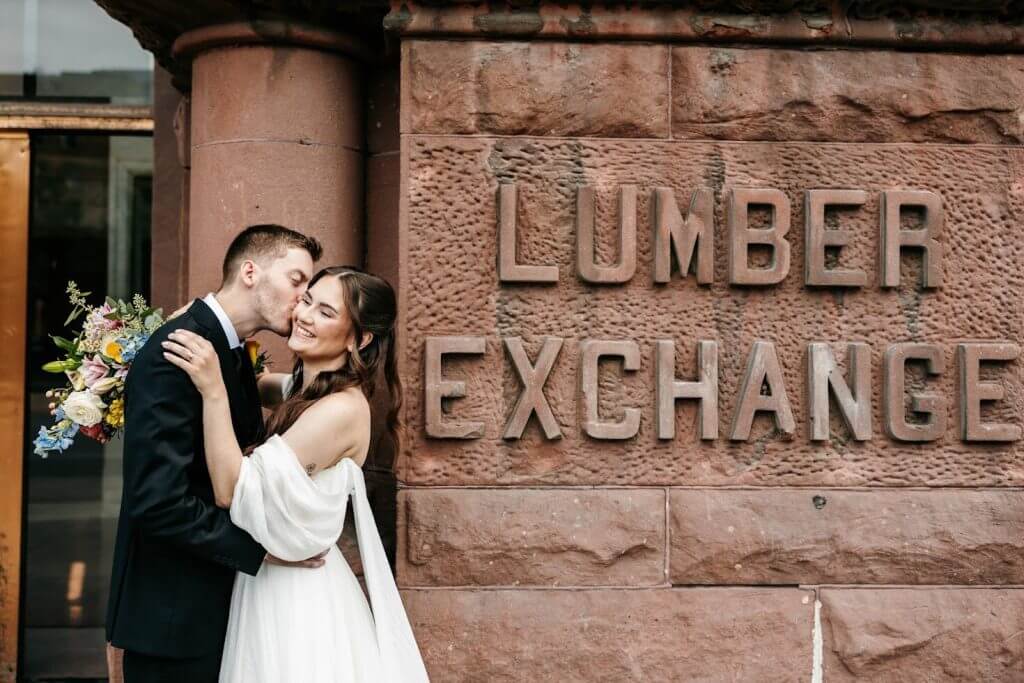
One of the most beautiful indoor wedding photo idea locations is the Lumber Exchange. The building’s 1886 Romanesque architecture, historic brick, ironwork, and vaulted interior event spaces carry portraits before you ever leave the block. Ceremony and portrait spaces share the same building, which cuts travel time entirely.
Our guide to the best wedding venues in Minneapolis is a useful reference for what different spaces offer photographically.
Best for: Indoor portraits, ceremony-to-portrait transitions with zero travel, winter and rain backup, historic architectural detail.
North Loop murals and art-forward spots
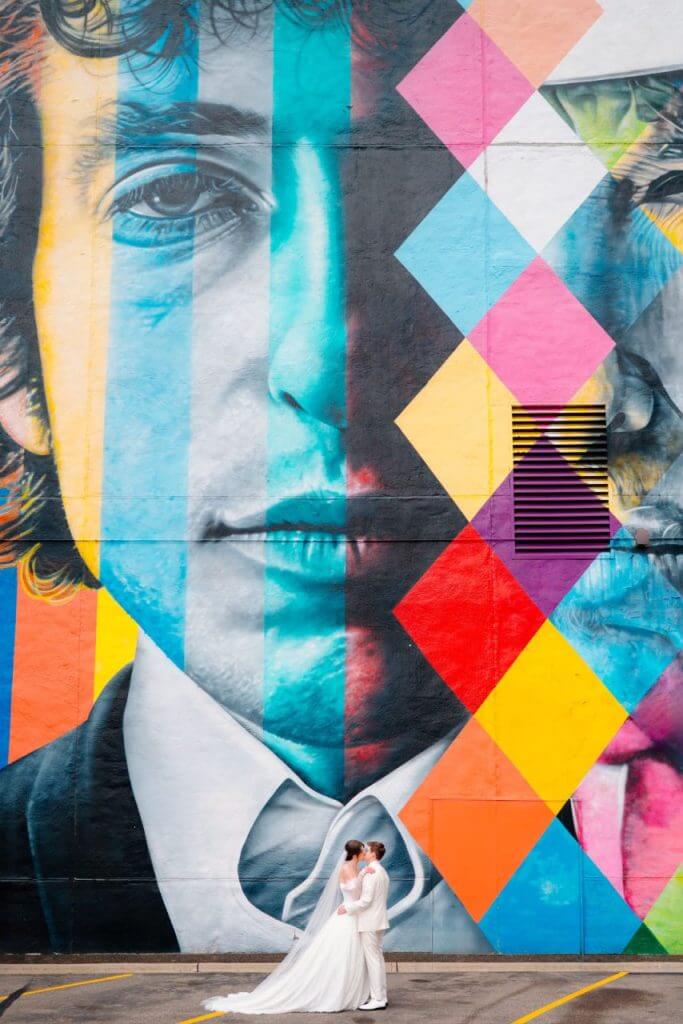
Murals and colorful walls around the North Loop and Downtown East layer wedding party shots with color and contrast that complement the architectural shots elsewhere in your session. These work especially well for looser, more editorial groupings.
Best for: Wedding party photos, editorial style, color contrast against architectural shots.
Wedding photography permits Minneapolis
Minneapolis park photo permit requirements apply to a significant portion of the most popular downtown shooting locations, including much of the Stone Arch Bridge area, riverfront parkways, and parks.
Ask your photographer which locations need Minneapolis park photo permit approval, confirm with the Minneapolis Park Board before finalizing your timeline, and factor the approval process into your schedule well in advance.
For venue-specific guidance, review the Lumber Exchange rules and regulations, our FAQ page for common logistics questions, and contact our team for any questions you may have.
Rain plan wedding photos, and cold weather too
Cold weather
Winter wedding photos in Minneapolis work best when you plan in 10 to 15 minute outdoor increments. Get outside, take the shots, return inside to warm up, repeat. Assign someone to manage coats and hand warmers to make logistics run smoothly.
Rain plan wedding photos
A solid rain plan wedding photos strategy starts before your wedding day. Decide on one strong indoor location before your wedding day, pack umbrellas for the walk between spots, and confirm your indoor backup works for your photographer. At the Lumber Exchange, the interior architecture, including stairwells and corridors, is strong enough to carry a full portrait session.
The Minneapolis Skyway connects 80 blocks of downtown via covered indoor walkways. Note: the Skyway closes at 6 PM on weekends, and hours are generally more reliable on weekdays. Confirm access for your specific date and day of the week before building it into your plan.
Here are two sample timelines couples can copy:
| Block | Time | Notes |
| Getting ready photos | 1:00-1:45 PM | Detail shots, candids, portraits |
| First look + couple portraits | 2:00-2:45 PM | Private moment, then portraits |
| Wedding party photos | 2:45-3:15 PM | Streamlined groupings |
| Family formals | 3:15-3:45 PM | Tight list, designated caller |
| Ceremony | 4:00-4:45 PM | |
| Cocktail hour | 5:00-6:00 PM | Couple attends |
| Golden hour portraits | 6:00-6:30 PM | Slip away briefly |
| Reception begins | 6:30 PM | |
| Reception buffer | 6:30-7:00PM | Absorbs delays before the program begins |
Without a first look:
| Block | Time | Notes |
| Getting ready photos | 1:00-1:45 PM | |
| Ceremony | 3:00-3:45 PM | |
| Family formals | 3:45-4:15 PM | |
| Wedding party photos | 4:15-4:45 PM | |
| Couple portraits | 4:45-5:30 PM | |
| Cocktail hour (partial) | 5:00-6:00 PM | The couple joins late |
| Golden hour portraits | 6:00-6:30 PM | |
| Reception begins | 6:30 PM | |
| Reception buffer | 6:30-7:00 PM | Absorbs delays before the program begins |
Build your wedding budget and vendor hours around whichever approach you choose. Photography rates, permit fees, and transportation between locations all affect your bottom line.
Make it easy for guests and vendors
Share a specific meeting point and arrival time with your wedding party. Out-of-town guests benefit from a parking note and a reminder that many downtown venues sit within a block of each other.
Assign one person to hold the rings and manage the bouquet between shots. Assign another person to manage the touch-up kit and water. Your photographer manages the camera for your Minneapolis wedding photos, and nothing else.
Send your wedding party a simplified “be here at this time” version of the schedule at least one week before the wedding. Follow up with a group text the morning of to confirm the first location and time.
For an added touch, a live wedding painter pairs beautifully with a golden hour portrait session and keeps cocktail hour entertaining while you’re still shooting.
FAQ
How many photo locations should we pick downtown?
Two to four wedding photo spots in Minneapolis is the practical sweet spot. More than that and you’ll end up spending portrait time in transit. Pick spots that serve different visual needs – one architectural, one riverfront, one with color or texture – and let your photographer work each one well.
How long should we plan for couple portraits?
When factoring in wedding portrait time, how long depends on your location count, but budget a minimum of 30 minutes and 45 to 60 minutes if you’re moving between spots.
Do we need a permit for the Stone Arch Bridge or parks?
Wedding photography permits in Minneapolis apply to much of the Stone Arch Bridge area and surrounding riverfront. Minneapolis park photo permit requirements are set by the Minneapolis Park Board, so ask your photographer which specific locations need permits and factor that into your planning timeline.
What is the best time of day for wedding photos in Minneapolis?
Golden hour wedding photos (taken in the 30 to 60 minutes before sunset) consistently produce the most flattering light. Use timeanddate.com for exact sunset time Minneapolis wedding dates and build your timeline backward from there.
What if sunset falls during our ceremony?
This happens frequently in late fall and winter. Prioritize pre-ceremony portraits during the best available afternoon light and plan for flash-assisted or indoor portraits during the evening reception.
How do we keep family photos from taking forever?
A clear family formal photos timeline starts with a printed list ranked from largest grouping to smallest, shared with your photographer in advance. Assign a family member to physically gather each group.
What should we bring for winter wedding photos?
Winter wedding photos in Minneapolis require hand warmers, a full-length coat for between shots, and a plan for outdoor time in short increments. The light is worth it, so plan 10 to 15 minute outdoor bursts and return inside to warm up between them.
Should we do a first look if we care about photography?
First look photo locations matter, but the decision to do one matters more. A first look gives your photographer more time, better light, and a more relaxed couple.
How do we take photos without missing cocktail hour?
A first look is the most reliable answer. It moves portraits pre-ceremony and protects the cocktail hour entirely. If you skip the first look, block extra wedding day buffer time post-ceremony and accept that you’ll arrive at cocktail hour late rather than miss it.
What is the simplest rain plan for wedding photos?
Identify one strong indoor location before your wedding day and confirm it with your photographer. At the Lumber Exchange, the interior holds up as a portrait setting entirely on its own.
How do we communicate the photo plan to our wedding party?
Send a simplified Minneapolis wedding photos checklist with clock times and locations only at least one week before the wedding. Follow up with a group text the morning of.
What should we tell out-of-town guests about downtown logistics?
Include a specific parking recommendation and meeting point in your wedding website or welcome bag. Note that many downtown venues sit within a block of each other. Your venue should be easy to reach from major downtown hotels. For any venue-specific logistics questions, the Lumber Exchange contact page is the fastest way to get answers.
Sorry, the comment form is closed at this time.